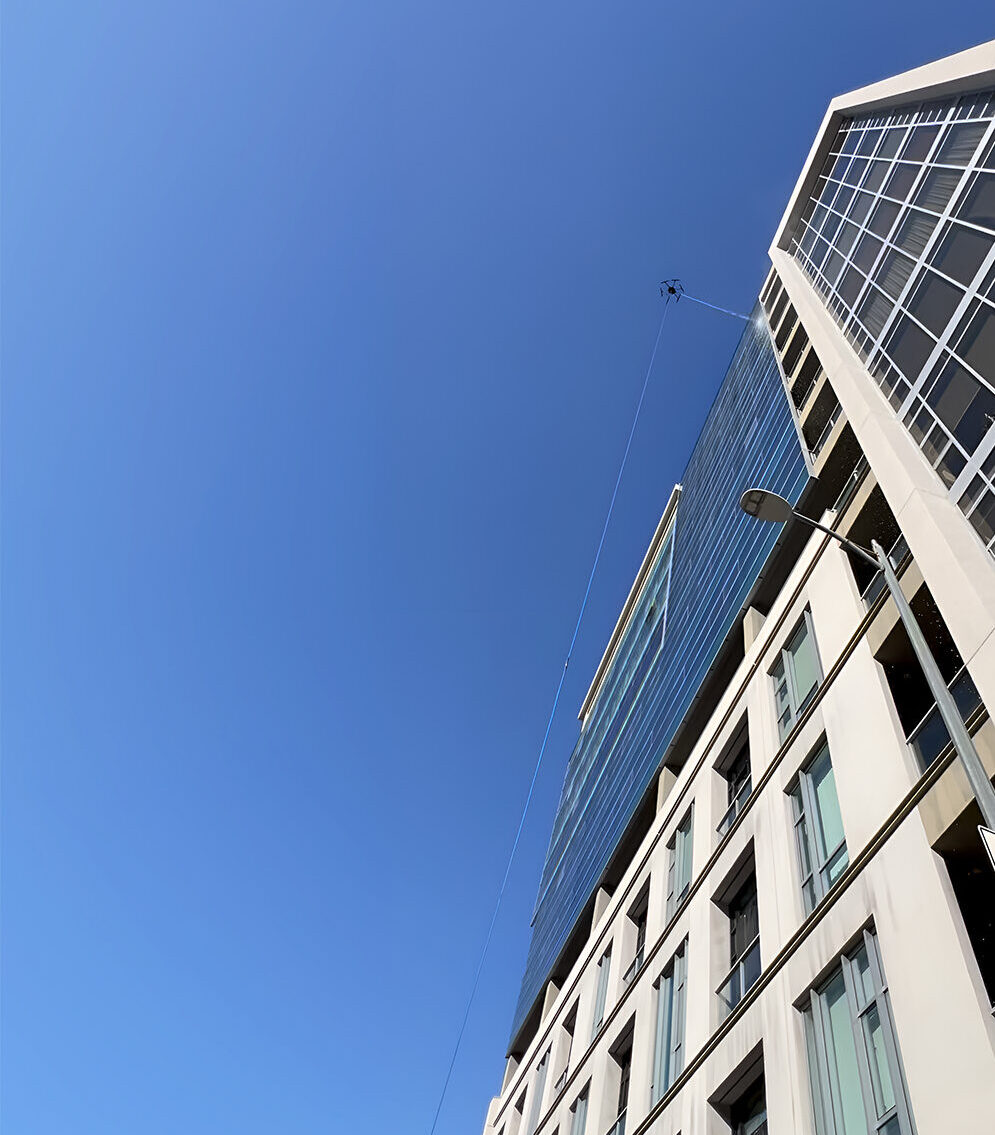
Built in the Field. Engineered for What’s Next.
From hands-on operations to the future of drone autonomy.
Built from real-world drone operations.

NavDome originated within Advanced Drone Solutions Inc., where years of exterior drone cleaning operations exposed the limitations of existing drone hardware and navigation systems.
In response, ADS developed Stratos, the market’s first GPS-denied cleaning drone, designed to maintain stable flight where traditional navigation systems struggle.
While building Stratos, a broader limitation became clear: autonomous drones still lack a persistent understanding of the environments they operate in. NavDome emerged from that realization.
NavDome's development continues to build on the operational and technical foundation established through Stratos.
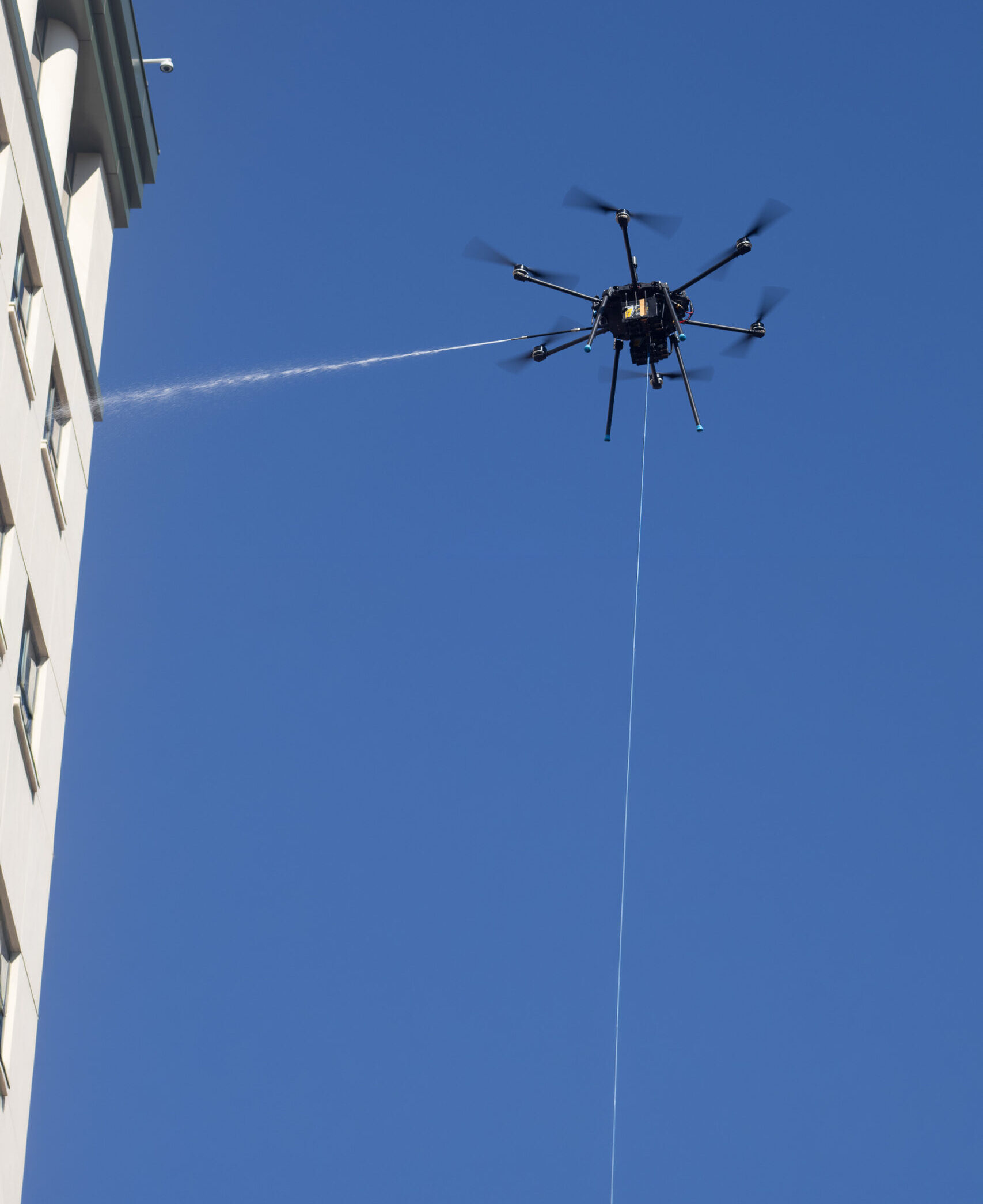
Developing in one of the most demanding environments for drone navigation.
Rather than designing autonomy systems in ideal laboratory conditions, NavDome is being shaped through real-world deployments via Stratos where precision, stability, and environmental awareness are continuously tested.
By developing NavDome within this environment, the system is forced to solve some of the hardest navigation problems drones encounter in practice—creating a foundation that can translate naturally to a wide range of other autonomous drone applications.
Exterior maintenance operations combine several of the most challenging conditions in drone navigation.
Close proximity flight
Most drone missions—such as surveying, mapping, agriculture, and cinematography—occur tens to hundreds of meters away from structures. Cleaning drones operate within centimeters to a few feet of vertical surfaces, often continuously. This leaves very little margin for positional drift.
GPS and sensors become unreliable near buildings
Large buildings introduce GPS multipath reflection, magnetic interference, and visual feature ambiguity. Glass facades in particular create difficult conditions for vision-based navigation systems.
Precise repeatable flight paths
Cleaning operations require highly repeatable paths across the same surfaces. While inspection drones can tolerate small deviations, cleaning drones must maintain stable alignment along facades for extended periods.
Unstable airflow near tall structures
Flying close to large vertical surfaces introduces wall effects, turbulence, and wind shear. Airflow around tall structures can create unpredictable updrafts and lateral gusts.
Changing weight and drag during flight
Cleaning drones often carry water systems, hoses, or variable loads that change the drone’s mass distribution and drag characteristics during flight, complicating control stability.
Little room for error
When operating close to structures, small localization errors can result in collisions—especially around facade features such as ledges, window frames, or architectural protrusions.